

Skim vs Whey: What’s the Difference and Which Milk Replacer Is Best for Your Calves?
News / Skim vs Whey: What’s the Difference and Which Milk Replacer Is Best for Your Calves?
Choosing the right calf milk replacer is one of the most important decisions in early calf rearing. With so many formulas available — including high-protein calf milk replacer options, skim milk replacer for calves, and whey-based calf milk replacer products — it’s no wonder farmers often ask which type will deliver the best results.
One of the most common debates is skim vs whey. Skim replacers were traditionally considered the “gold standard,” mainly due to their casein content and clotting ability. But modern research now shows that there is no consistent performance advantage of skim over whey, and both can rear excellent calves when manufactured to a high nutritional standard.
Below, we break down the differences clearly so you can choose the best milk replacer for your system, feeding equipment, and goals.
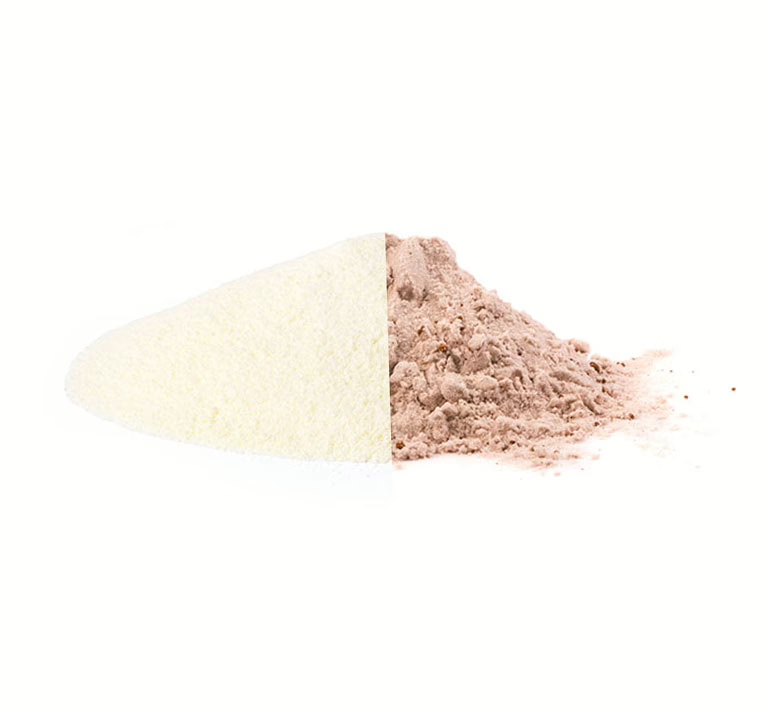
1. What is a Skim Milk Replacer?
Skim-based milk replacers use skimmed milk powder as the main protein source. This means they contain casein, a clot-forming protein that delays gastric emptying. Decades ago, this was believed to improve nutrient absorption, which is why skim was often marketed as superior.
However, with advances in dairy processing and improvements in whey protein quality, the perceived performance advantage of skim has largely disappeared. Studies show no measurable difference in daily live weight gain, health, or overall development between calves fed high-quality skim-based replacers and those fed whey-based formulas.
Skim replacer characteristics:
- Casein protein forms a clot in the calf’s stomach
- Slightly slower digestion
- Historically popular, though not shown to outperform whey
- Often more expensive despite similar outcomes
2. What is a Whey-Based Milk Replacer?
Whey-based replacers use whey protein, which is highly digestible and rapidly absorbed by young calves. Thanks to advanced filtration and drying technologies, today’s whey proteins are exceptionally high quality, meaning they support strong early growth.
Whey replacers dissolve easily, making them ideal for both manual mixing and automatic feeders. This quick solubility contributes to consistent feeding and fewer mixing issues on farm.
Whey replacer characteristics:
- Fast digestion and efficient absorption
- Excellent solubility and consistency
- Perfect for automatic feeders
- Proven to support healthy, even growth
Most importantly:
Modern research shows no performance disadvantage of whey compared to skim.
3. Skim vs Whey: Which Performs Better?
Based on up-to-date research and real-world farm results, the answer is clear:
✔ Neither protein source is “better” — both perform equally well when the replacer is well formulated.
There is no scientific evidence that skim replacers deliver superior growth rates, immune function, coat condition, or digestive stability. Calves fed well-balanced whey-based calf milk replacers achieve the same outcomes.
Whey also delivers several practical on-farm benefits:
- More consistent mixing
- Improved solubility (reducing clumps and residues)
- Better suited to automatic feeder calibration
- Often more cost-effective
- Highly digestible for young calves
This is why many nutritionists — and most leading calf milk replacer suppliers in Ireland — now recommend whey-based formulas for reliable performance.
4. What Matters Most When Choosing a Milk Replacer
Instead of focusing on skim vs whey, the real priorities should be:
Protein quality & percentage
Look for high-protein calf milk replacers (22–26%) for strong frame and muscle development.
Fat level
Essential for energy and early-life immunity, typically 16–20%.
Vitamin & mineral balance
Critical for bone development, immunity, and long-term growth.
Digestibility & solubility
Whey-based replacers often excel here, ensuring consistency in every feed.
Trusted suppliers with strong technical support
Correct feeding guidance, storage advice, and troubleshooting make a huge difference — especially during the busy calf-rearing season.
5. So Which Replacer Should You Choose?
Both skim and whey-based calf milk replacers can rear strong, healthy calves — and performance depends far more on formulation quality than the protein source itself.
However, with no proven advantage to skim, many farmers choose whey-based replacers because they provide:
- Excellent digestibility
- Smooth solubility
- Reliability in automatic feeders
- Consistent nutritional profile
- Great value
- Proven results on Irish farms
A high-quality whey-based replacer is often the most practical and effective choice for modern calf-rearing systems.
Final Thoughts
The best milk replacer isn’t just skim or whey, it’s the one formulated with high-quality ingredients, balanced nutrition, and proven digestibility. Farmers across Ireland and Northern Ireland often find the most success with a replacer that matches their feeding system, climate, and growth goals.
Eringold’s calf milk replacer range is designed with this in mind, offering high-performance options in both skim-based and whey-based formulations, including high-protein calf milk replacers trusted for consistent, reliable results.